

Beyond the Arch: A Guide to Living with Flat Feet
Have you ever looked at your footprints in the sand and noticed they look more like solid rectangles than elegant curves? Or maybe you’ve noticed that your shoes wear out much faster on the inside edge? If so, you’re likely part of the “Flat Foot Club.”
While “flat feet” (or pes planus) is a common condition, it’s often misunderstood. Let’s break down what’s happening under the hood—or rather, under the sock.
What Exactly Are Flat Feet?
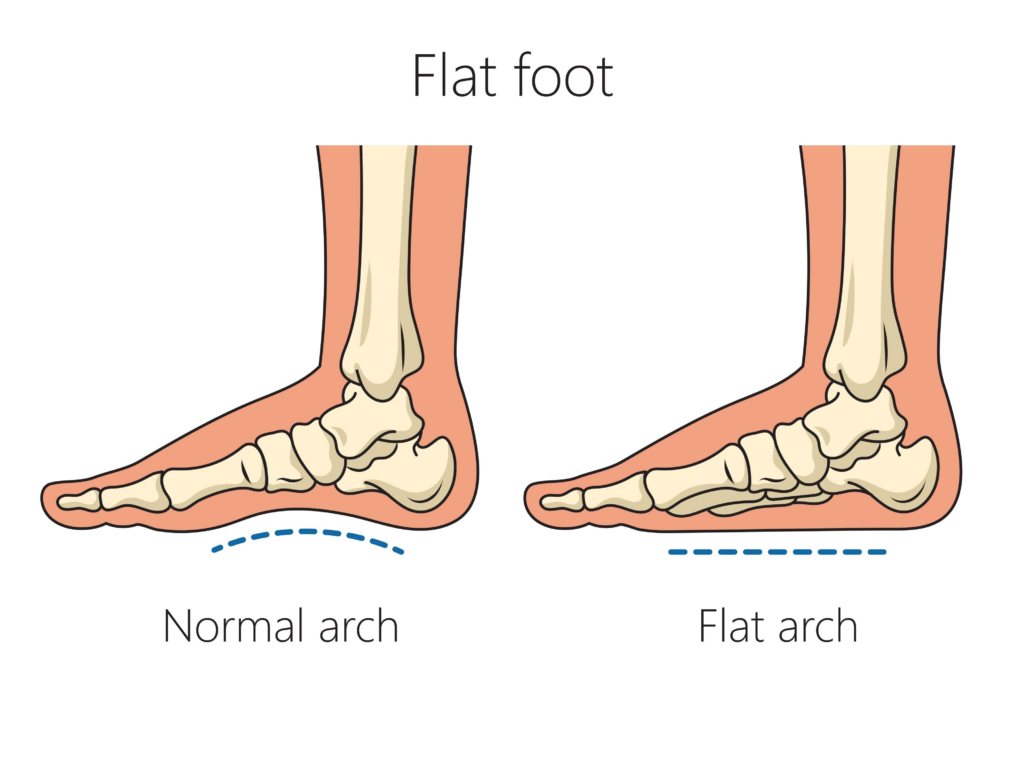
In a “typical” foot, the tendons in the foot pull together to create an upward curve known as the arch. This arch acts like a natural shock absorber, distributing your body weight as you walk or run.
Shutterstock
Explore
Are All Flat Feet the Same?
Not quite. There are two main types:
- Flexible Flat Feet: You have an arch when you’re sitting down or standing on your tiptoes, but it disappears the moment you put weight on your feet. This is the most common type.
- Rigid Flat Feet: The foot is flat regardless of whether you are standing or sitting. This is often due to bone or joint issues.
The “Domino Effect” of Flat Feet
The most important thing to understand is that the foot is the foundation of the house. If the foundation is tilted, the rest of the structure feels it. When your arches collapse, your ankles often roll inward (overpronation). This can lead to:
- Shin Splints: Pain along the large bone in the front of your lower leg.
- Knee and Hip Pain: Because your legs are rotating inward more than they should.
- Lower Back Aches: Your spine has to work harder to compensate for the lack of “spring” in your step.
How to Manage the “Flatness”
If your flat feet aren’t causing pain, you generally don’t need to do anything! But if you’re feeling the ache, here is how to find relief:
- Supportive Footwear: Look for shoes with “motion control” or “stability.” Avoid flimsy flip-flops or flat sneakers with zero structure.
- Arch Supports (Orthotics): Over-the-counter inserts can help, but for chronic pain, a Chiropodist can prescribe custom orthotics designed specifically for your unique foot shape.
- Strengthening Exercises: * Short Foot Exercise: Try to “shorten” your foot by pulling the ball of your foot toward your heel without curling your toes.
- Towel Curls: Use your toes to scrunch up a towel on the floor.
- Weight Management: Reducing the load on your feet can significantly decrease the pressure on your arches.