


Fungal infections of the skin and nails are incredibly common problems. Many people feel embarrassed when they notice changes in their feet or hands. However, these conditions are a normal part of life for many individuals. They occur when microscopic organisms find a warm and moist place to grow. Your feet are often the perfect environment for these unwanted guests. Understanding how these infections start is the first step toward clearer skin and nails.
Understanding Fungal Skin Infections
Fungal skin infections are often referred to as tinea. The most famous version is tinea pedis, which we commonly call athlete’s foot. This condition usually starts between the toes. It causes a red and itchy rash that can feel like it is burning. Sometimes, the skin will crack or peel away in small flakes.
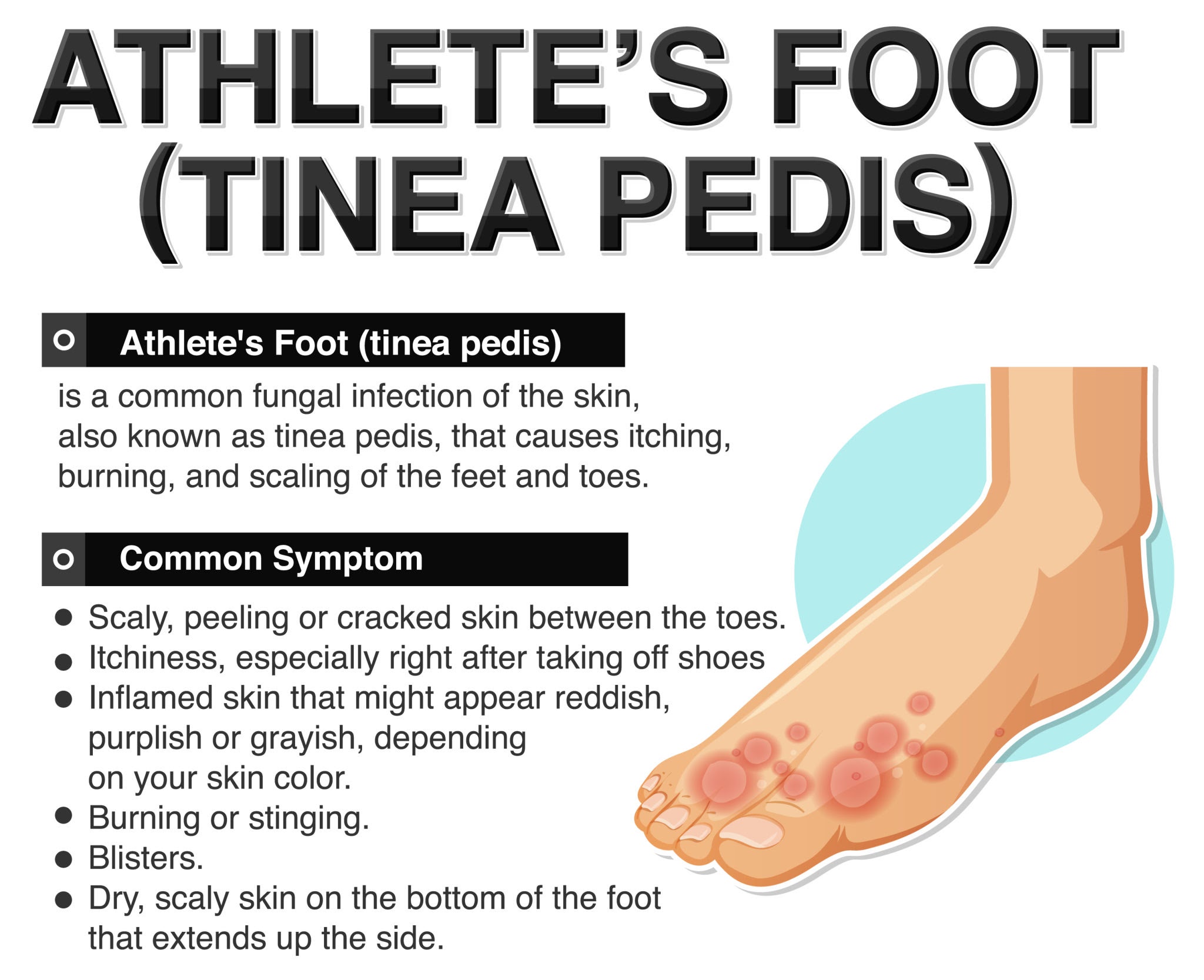
Informative poster of Athlete foot
In addition to the itching, you might notice small blisters forming on the soles of your feet. These blisters can be quite painful if they pop or rub against your shoes. Furthermore, the fungus can spread to other parts of your body if you touch the infected area. It is very contagious and can jump from person to person easily. You might pick it up at a gym or a public swimming pool. These damp environments are breeding grounds for fungal spores.
Consequently, maintaining dry skin is vital for prevention. If your feet stay sweaty all day, the fungus will thrive. It feeds on the keratin found in your skin cells. As it grows, it releases enzymes that break down the outer layer of your skin. This process is what leads to the redness and irritation you see.
The Challenge of Fungal Nails
Fungal nail infections are medically known as onychomycosis. This condition is often more stubborn than skin infections. It typically begins as a small white or yellow spot under the tip of the nail. As the infection goes deeper, the nail may begin to discolor significantly. It can turn dark yellow, brown, or even black over time.
Moreover, the texture of the nail will change. It often becomes thick and very brittle. You might find it difficult to trim your nails because they crumble so easily. Sometimes, the nail will even start to lift away from the nail bed. This can be quite uncomfortable when you wear tight shoes. The debris that builds up under the nail often has a distinct and unpleasant odor.
While it is rarely a life-threatening issue, it can be a major cosmetic concern. People often hide their feet in closed-toe shoes to avoid judgment. Unfortunately, hiding the problem usually makes the environment even better for the fungus. It needs darkness and moisture to continue its cycle of growth.
Identifying Common Risk Factors
Several factors make some people more prone to these infections. First, your age plays a big role in your risk level. As you get older, your blood circulation often decreases. This means your body cannot fight off infections as quickly. Additionally, older nails grow more slowly and become thicker with age.
Second, your overall health impacts your vulnerability. People with diabetes often struggle with fungal infections. This is because high blood sugar levels can provide fuel for the fungus. Furthermore, a weakened immune system makes it harder for the body to keep fungi in check.
Third, your daily habits and environment are crucial. If you work in a job where your feet are always wet, you are at high risk. Similarly, wearing tight-fitting shoes prevents your feet from breathing. This creates a miniature greenhouse inside your socks. Fourth, walking barefoot in locker rooms or communal showers is a major mistake. These surfaces are often covered in invisible fungal spores waiting for a host.
Effective Treatment Strategies
If you suspect you have a fungal infection, you should act quickly. Treating the skin is usually faster than treating the nails. You can start with over-the-counter antifungal creams or powders. These products contain ingredients like terbinafine or clotrimazole. You must apply them consistently for several weeks to see results.
For nail infections, the process is much longer. Topical lacquers can be applied directly to the nail plate. However, these often have trouble penetrating the thick nail surface. You may need to file down the nail before applying the medicine. This helps the liquid reach the actual site of the infection.
In more severe cases, oral medications might be necessary. These are prescribed by a doctor and work from the inside out. They help a new, healthy nail grow in to replace the infected one. You must be patient because nails grow very slowly. It can take six months to a year for a clear nail to fully emerge.
Best Practices for Treatment
- Consistency: Never skip a day of applying your medication.
- Hygiene: Wash your hands immediately after touching the infected area.
- Persistence: Continue treatment even after the symptoms seem to vanish.
The Importance of Foot Hygiene
Good hygiene is the foundation of healthy skin and nails. You should wash your feet every single day with soap and water. Pay special attention to the spaces between your toes. After washing, you must dry your feet completely. Use a separate towel for your feet to avoid spreading the fungus to other body parts.
Furthermore, you should change your socks at least once a day. If you exercise, change them immediately after your workout. Choose socks made of moisture-wicking materials like wool or specialized synthetics. Cotton is actually a poor choice because it holds onto moisture.
Rotating your shoes is another smart move. Do not wear the same pair two days in a row. This gives the shoes twenty-four hours to dry out completely. You can also use antifungal sprays inside your shoes to kill any lingering spores. This prevents you from reinfecting yourself every time you get dressed.
When to Seek Professional Advice
Sometimes, home treatments are not enough to solve the problem. You should see a doctor or a podiatrist if the infection is spreading. If your skin becomes very red, hot, or swollen, you might have a secondary bacterial infection. This requires immediate medical attention and possibly antibiotics.
A professional can take a small clipping of your nail for testing. This confirms that the issue is actually fungal and not something else. Conditions like psoriasis can sometimes look very similar to fungal nails. Getting an accurate diagnosis ensures you are using the right medicine. For more detailed information on clinical symptoms and medical treatments, visit the CDC page on fungal nail infections.
Preventing Future Outbreaks
Once you have cleared the infection, you want to keep it away forever. Prevention requires a change in lifestyle and habits. Always wear flip-flops or water shoes in public damp areas. Never share towels, shoes, or nail clippers with other people.
Keep your nails trimmed short and straight across. This prevents small injuries where fungi can enter the nail bed. If you go to a salon for pedicures, ensure they sterilize their tools properly. You might even consider bringing your own kit to be safe.
Check your feet regularly for any new signs of redness or peeling. Early detection makes treatment much easier and more effective. If you catch a skin infection early, you can stop it before it moves to your nails. Staying vigilant is the best way to maintain healthy, happy feet.
Recovery and Prevention Summary
| Action | Frequency | Primary Benefit |
| Apply Antifungal | Twice Daily | Kills active fungal growth. |
| Dry Between Toes | Every Morning/Night | Removes the moisture fungus needs. |
| Rotate Shoes | Every 24 Hours | Allows footwear to dehumidify. |
| Wear Flip-Flops | In Public Showers | Acts as a barrier against spores. |
| Trim Nails | Weekly | Reduces hiding spots for fungus. |
Conclusion
Fungal skin and nail conditions are a nuisance, but they are manageable. It takes a combination of the right medicine and better hygiene. You must be prepared for a long journey, especially with nail issues. Do not get discouraged if progress feels slow at first.
Consistency is the most important part of any antifungal routine. By making small changes to your daily habits, you can protect yourself. Keep your feet dry, wear the right socks, and never go barefoot in public. Your skin and nails will thank you for the extra care. With time and effort, you can reclaim your confidence and walk comfortably again. Healthy feet are within your reach if you stay dedicated to the process.